The Best Magnifiers for Word Searches and Small Print
As an Amazon Associate, PickJot earns from qualifying purchases. That never changes the price you pay. How we make money. We have not lab-tested these products; read how we pick at the end.
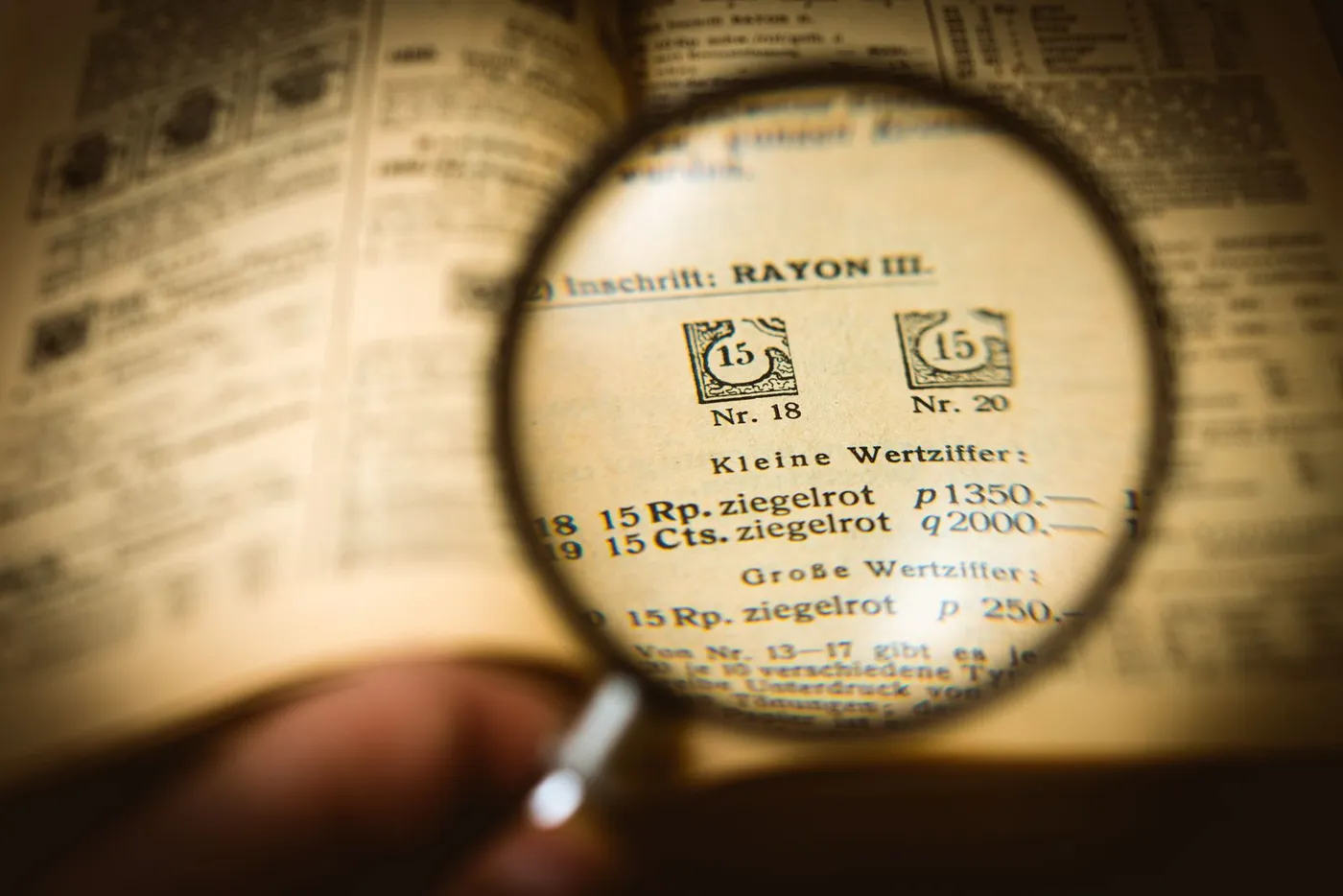
Photo: Pixabay on Pexels
Short answer: for most word-search players, a large lighted handheld magnifier at 2x to 3x is the best first buy. Take the 30-second test below to check.
It's a quiet evening. You've got a fresh word search, a sharp pencil and a cup of tea going cold. Then the grid starts doing that thing where the letters swim, and you're tilting the page toward the lamp just to tell an E from an F.
A magnifier fixes that. The trouble is that most people buy the wrong kind first: something too strong, too small, or too dim. This guide takes about five minutes. By the end you'll know how much magnification you need and which of four types fits the way you puzzle.
First, a 30-second print-size test
Hold your phone or screen at your normal reading distance. Look for the word CAT in each grid below, reading across. Then tick the smallest grid you can read without squinting or leaning in.
Which is the smallest grid you can read comfortably?
Pick one to see what we'd suggest.
Whatever you picked, keep one thing in mind: stronger is not better. A 5x lens shows you about one word at a time and you have to hold it at just the right height. For a word search, where your eyes sweep across whole rows, 2x to 3x with a big lens beats a tiny powerful one almost every time.
Photo: Nothing Ahead on Pexels
What puzzlers told us
We read what people actually say when they talk about word searches and failing eyesight. Three things come up again and again.
"…and some large print word searches. They were great when I couldn’t find my glasses."
A Reddit user in r/Kneereplacement
Large print alone is enough for many people, some of the time. A magnifier earns its place on the days it isn't: tired eyes, dim rooms, a regular puzzle book someone gave you.
"Large print crosswords or word search books may be good, but I’m sure it depends on how much central vision she has remaining."
A Reddit user in r/Blind
That's the honest limit. If the middle of your vision is blurred (as with macular degeneration), bigger letters help less, and a lighted magnifier or a magnifying lamp with even light usually helps more. A low-vision clinic can tell you which.
"Her hands aren’t as steady anymore and small pieces are a no-go."
A Reddit user in r/GiftIdeas
Unsteady hands and a handheld lens don't mix. That's why the hands-free pick below is there.
The four types, side by side
| Type | Best for | Watch out for |
|---|---|---|
| Large lighted handheld (2x to 3x) | Sweeping across rows; one hand on the pencil | Tired arm after a long session |
| Full-page sheet (fresnel) | Seeing the whole grid at once; cheap | Blurry near the edges; must lie flat |
| Hands-free (neck or stand) | Shaky hands; circling words with both hands free | Takes a minute to set the height |
| Magnifying lamp | Puzzling at a table every day | Needs a table edge to clamp onto |
Jump to our top pick on Amazon
Our picks
Budget, Mid-range and Splurge are rough price levels, not prices. Prices change often; the Amazon link shows the current one.
A big lens, about the width of a puzzle row, lets you read a whole line in one pass instead of hunting letter by letter under a small one. The built-in LEDs matter more than they sound: brighter letters look sharper, so a 3x lens with light often reads better than a 5x without.
Example: the Fancii extra-large LED handheld magnifier, a lens about 5 inches across at 2x with a small 4x spot for labels. A rectangular lens of a similar size, from any brand, does the same job.
- Look for: a lens at least 3 inches wide, 2x to 3x, LEDs that shine down onto the page rather than into your eyes.
- Skip: anything sold mainly as "10x" or "30x". Those are for coins and stamps.
This is a thin plastic sheet the size of a page. Lay it over the whole puzzle and the grid is bigger at once, so you can still see the shape of the board. It costs less than lunch.
- Look for: a page-size fresnel sheet, usually sold around 3x, ideally with a bookmark-size spare for word lists.
- Skip it if: you need to write through it. You lift it to circle each word, which some people find fiddly.
Photo: Isabella Álvarez on Pexels
Hands-free models hang around your neck or sit on a small stand over the page. Both hands stay free: one holds the book steady, the other circles the word. If a handheld lens wobbles when you hold it, this is the one.
- Look for: a big lens (4 inches or more), a cord or stand you can adjust, and a light.
- Watch out: neck-worn types rest on your chest, so they suit sitting upright better than lying in bed.
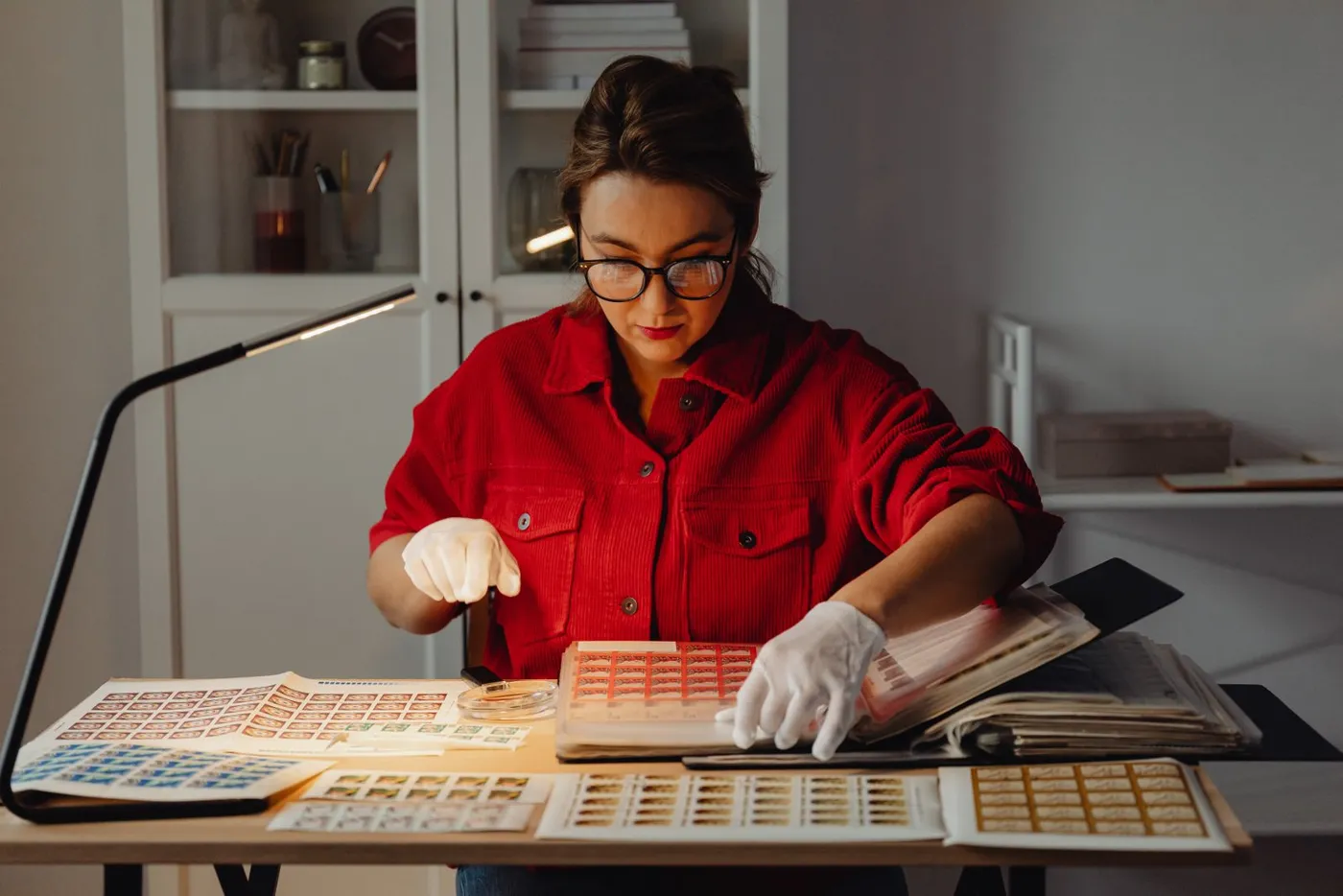
Photo: https://kaboompics.com/ on Pexels
A lamp with a lens in the head, on an arm you clamp to the table. It gives the most even light of anything here and there is nothing to hold. Lenses are sold in diopters: a 5-diopter lens is about 2.25x, which is a comfortable strength for puzzles.
Example: the Brightech LightView Pro range, sold as clamp, desk and rolling floor versions. Magnification differs by version (roughly 1.75x to 2.25x), so check the listing before you buy.
- Look for: 3 to 5 diopters, a clamp or weighted base, dimmable LEDs.
- Skip it if: you puzzle in a recliner or in bed. It stays where you put it.
How to use a magnifier so it actually helps
Most "this magnifier is useless" moments come down to distance. Hold the lens close to the page, then slowly lift it until the letters are sharp. With a handheld that is often only an inch or two above the paper. If you hold it near your eye like glasses, the picture goes blurry and tiny.
Light from the side beats light from behind. If you're right-handed, put the lamp on your left so your hand doesn't throw a shadow over the word you're circling.
Video: How to Use a Hand and Stand Magnifier for Everyday Reading, by Low Vision Calgary (a low-vision optometry clinic)
If you already bought one and it's not working
- Everything is blurry: you're holding it too far from the page. Start flat on the paper and lift.
- You only see half a word: the lens is too strong for puzzles. Keep it for labels, and get a larger 2x to 3x lens for the grid.
- Glare or hot spots: tilt the lens slightly so the LEDs point at the page, not straight back at you.
- The sheet magnifier is fuzzy: lay it completely flat and keep the part you're reading in the middle. The edges of a fresnel sheet are always softer.
- Light is dim: fresh batteries first. Many lights fade long before they go out.
Questions people ask
What magnification is best for word search puzzles?
For most people, 2x to 3x with a large lens. It's strong enough to make the letters clear and wide enough to read a whole row. Higher power shrinks what you can see at once.
Is a lighted magnifier really better?
Usually, yes. Brighter letters look sharper, so a lighted 3x often reads better than an unlit 5x. Choose one whose light points down at the page.
Are full-page magnifier sheets any good?
For seeing a whole puzzle at once, and for the price, they are fine. They are softer at the edges and you have to lift them to write, so they suit some people more than others.
Will using a magnifier make my eyes worse?
A magnifier won't damage your eyes. If your eyes feel tired, take short breaks. If your vision changes suddenly, or straight lines start to look wavy, see an eye doctor soon.
Should I just buy large-print puzzles instead?
If large print reads comfortably for you, that's the simplest fix, and our large-print word searches are free. A magnifier helps with everything else: newspapers, regular books, labels.
Try it on a free puzzle tonight
Print one of our free large-print word searches. If the letters still swim, start with the large lighted magnifier: it fixes the most common problem for the least fuss.
Check price and reviews: the Fancii magnifier Pick a free puzzle