The Best Lap Desk for Puzzle Books: What Works in a Recliner, Bed or Couch
As an Amazon Associate, PickJot earns from qualifying purchases. That never changes the price you pay. How we make money. We have not lab-tested these products; read how we pick at the end.

Photo: George Milton on Pexels
Short answer: in a recliner or on the couch, a cushioned lap desk with a hard top and a ledge; in bed for long stretches, a bed tray with legs.
You've settled into the recliner with a puzzle book on your knees. Two words in, the pencil goes straight through the page. The book slides toward your lap every time you shift, and the pencil rolls down between the cushions for the third time tonight.
None of that is about the puzzle. It's about the surface under it. A lap desk gives you a firm, level spot to write on wherever you sit. Here's what to look for, and which kind suits a recliner, a bed or a couch.
Why the first lap desk often disappoints
Almost every lap desk is sold for laptops. The photos show a computer, the selling points are vents, a mouse pad and a phone slot, and the top is often a soft, padded surface that feels nice under your wrists. None of that helps a puzzle. A padded top is the same problem as a pillow, and a laptop desk with no ledge lets a book slide straight off when you lean back.
So people buy the best-reviewed "lap desk", find their pencil still pokes through, and decide lap desks don't work. They do. You just need the plain kind: hard top, a lip at the bottom, cushion or legs underneath.
Try the pencil test
Press a pencil dot onto paper resting on a pillow, then onto a hardback book
On the pillow the paper dents and the tip catches; press a bit harder and it tears. On the book you get a clean dot. That's the whole case for a lap desk: a hard top turns a soft lap into a writing surface.
No pencil handy? Look at the last page you finished in the recliner. Dented letters and torn circles mean the surface is too soft.
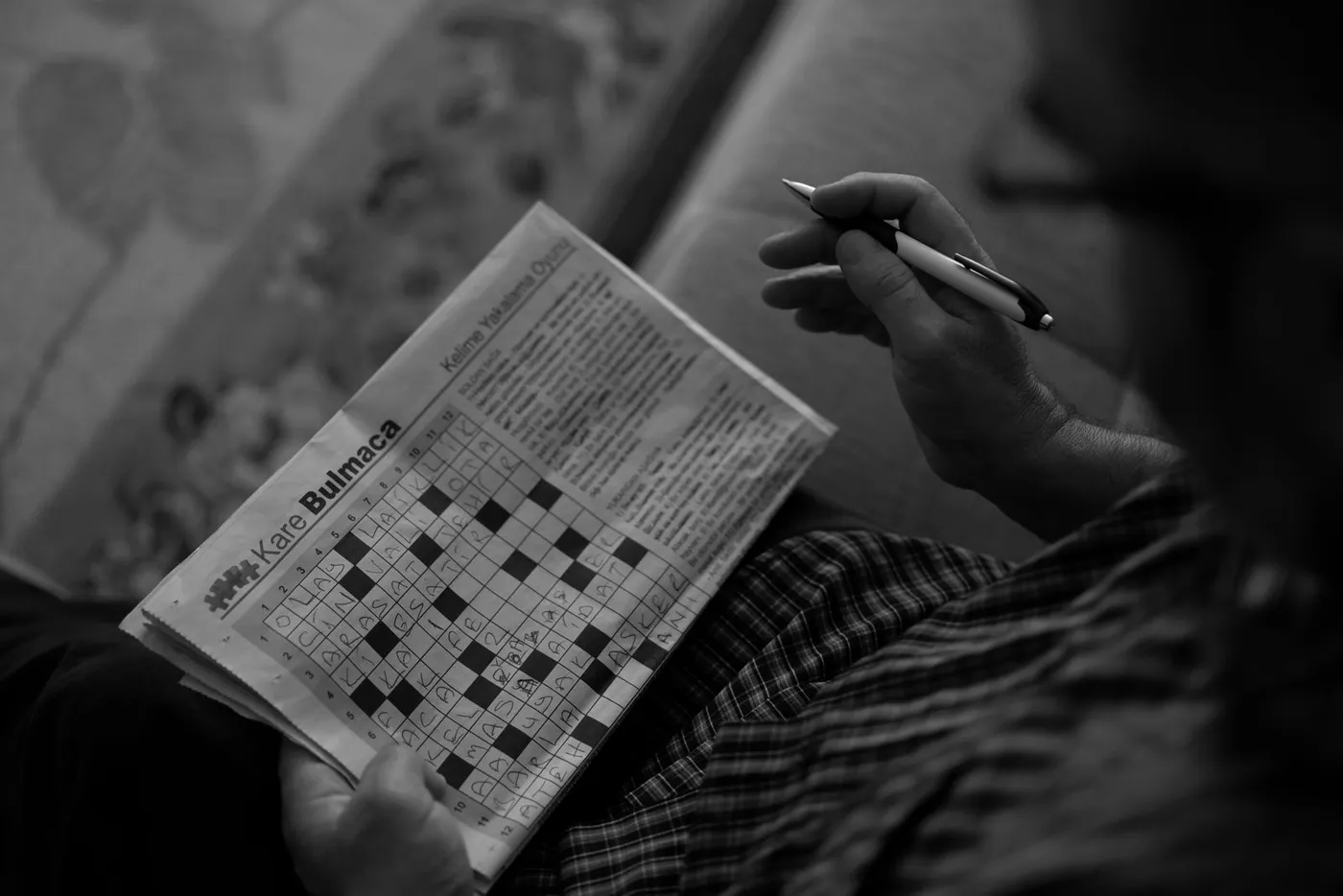
Photo: Beyzaa Yurtkuran on Pexels
What puzzlers told us
A lot of puzzling happens when someone can't get up: after surgery, in hospital, or on a bad day. Those are the people who most need a steady surface.
"Make sure you have low-energy activities to keep you occupied the first week! I got a large print jumbo word search."
A Reddit user in r/TopSurgery
Low energy is the point. Holding a book up in bed gets tiring fast, so the surface should hold it for you.
"Screens are kinda hard to hold up for games."
A Reddit user in r/spinalfusion
Paper is lighter than a tablet, but a puzzle book still needs something under it. A bed tray takes the weight off your arms completely.
"Include a pen or pencil with a pencil grip support in case she has arthritis."
A Reddit user in r/povertyfinance
Good advice for sore hands, and a firm surface helps here too: less pressure is needed when the page doesn't give way under the pencil.
What matters for puzzles (and what doesn't)
| Feature | Why it matters for puzzles |
|---|---|
| Hard, flat top | Clean pencil marks, no torn pages |
| A ledge or lip along the bottom | Stops the book and pencil sliding off when you lean back |
| Cushion underneath, or legs | Cushion sits level on uneven knees; legs keep weight off your lap in bed |
| Size at least a book open flat | Room for the open book plus your pencil and magnifier |
| Laptop vents, phone slots, mouse pad | Not much. Nice extras, but they don't help a puzzle |
The four types at a glance
| Type | Best for | Weight on you | Price level |
|---|---|---|---|
| Cushioned lap desk with ledge | Recliner, couch | Some | Budget |
| Bed tray with legs | Bed, long sessions | None | Mid-range |
| Board with a clip | Single printed sheets, small laps | Very little | Budget |
| Over-bed table | Recovery, many hours in bed | None | Splurge |
See our top pick: a hard top with a ledge, so the book stops sliding
Our picks
Budget, Mid-range and Splurge are rough price levels, not prices. Prices change often; the Amazon link shows the current one.
A firm board on top of a soft pillow. The pillow shapes itself to your knees whether your legs are up on the footrest or tucked to one side, and the top stays level. Huanuo is one brand people often name for this style.
- Look for: a hard top, a ledge along the bottom edge, a top about 20 inches wide or more.
- Watch out: bead-filled cushions are cosy but a little heavier to lift.
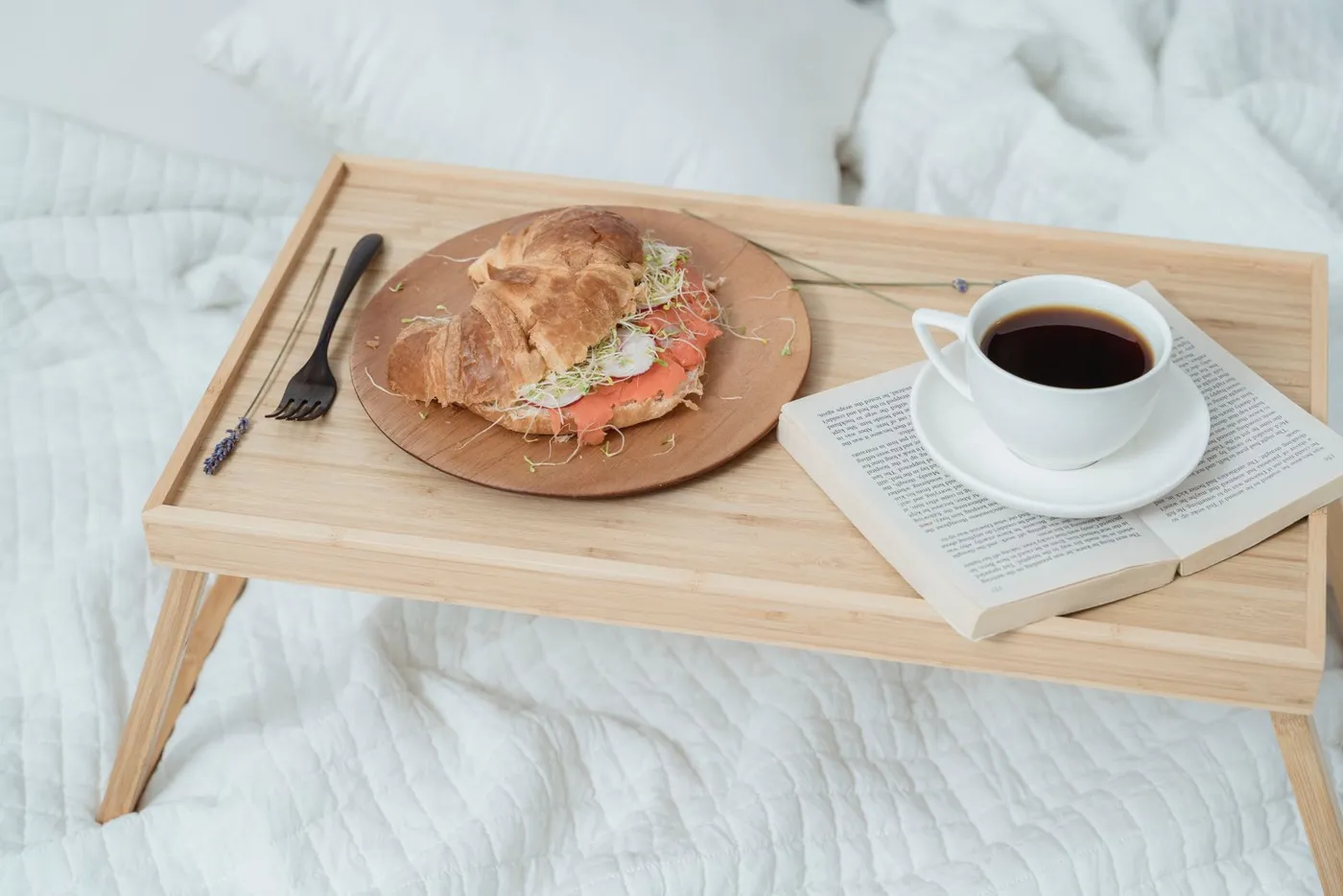
Photo: Miriam Alonso on Pexels
Legs stand on the mattress either side of your lap, so the book doesn't press on your legs at all. Many have a top you can tilt like a reading stand, which saves your neck on long sessions.
Example: the SONGMICS bamboo bed desk with a tilting top. SONGMICS also makes a simpler folding tray if you don't need the tilt.
- Look for: legs that lock open, a tilting top with a stop to hold the book, a height that clears your knees.
- Watch out: on a very soft mattress some trays wobble. Check the reviews for "stable".
A slim, rigid board with a clip at the top, like a big clipboard. It weighs almost nothing, so it's good for small laps, waiting rooms and anyone who finds a cushion desk too heavy. The clip holds a single printed puzzle completely still.
- Look for: a letter-size or larger board, a strong clip, a pencil groove.
- Watch out: no cushion, so it sits less level on uneven knees.
A table on wheels that slides over the bed or the recliner, like the ones in hospitals and care homes. Nothing rests on you at all, and it's the steadiest surface here. A good choice for someone spending a lot of time in bed or recovering from surgery.
Example: LITTLE TREE makes a popular height-adjustable over-bed table on wheels. Fancier tilting models cost several times more, so decide whether you need the tilt.
- Look for: height adjustment, locking wheels, a base that slides under the bed or chair.
- Watch out: the biggest and priciest option. Measure under the chair before buying.

Photo: https://kaboompics.com/ on Pexels
Set it up so your neck doesn't complain
A lap desk puts the page lower than a table does, and that's where neck ache comes from. Two small changes help: tilt the book toward you (a rolled towel under the top edge works) and bring it a little closer to your chest. Pair it with a light from the side opposite your writing hand; our lighting guide explains why.
Video: A different idea for a recliner: a desk on a stand that swings over the chair (Levo desk review by Antonio Sanson)
If you already have one and it's not great
- Book still slides off: add a strip of non-slip drawer liner across the top, or use the clip type.
- It's too heavy: keep it on the arm of the chair and slide it across, rather than lifting it each time.
- It sits too low in bed: put a firm pillow under the cushion, or move to a tray with legs.
- Pencil keeps rolling away: a six-sided pencil rolls less than a round pen, or tie it to the board with a short string.
Questions people ask
What is the best lap desk for a recliner?
One with a soft cushion underneath and a hard top with a ledge. The cushion keeps it level whatever your legs are doing, and the ledge stops the book sliding when you lean back.
Is a lap desk or a bed tray better for doing puzzles in bed?
A bed tray with legs, if you puzzle for long stretches: nothing presses on your legs and many tilt. A cushioned lap desk is better if you sit more upright and want something lighter.
Can I just use a cookie sheet or a hardback book?
For a quick puzzle, yes. That's the pencil test in action. A lap desk adds the ledge, the cushion and the size that make long sessions comfortable.
What size lap desk do I need for puzzle books?
Enough for an open book plus a pencil: roughly 20 inches wide or more. For single printed sheets, a letter-size clip board is plenty.
Get comfortable, then pick a puzzle
Most puzzlers in a recliner are happiest with a cushioned lap desk that has a hard top and a ledge. Print a free large-print word search, clip it on, and settle in.
Check price and reviews: cushioned lap desks Pick a free puzzle